Sunday, June 8, 2008

Chipboard

When it came, it came from all sides.

It had been a hazy few days, but the man on the radio said that there was a cold front coming in. It would clear out the sky – make it easier for Sonali to breath. “A cold front.” Standing at the window, I imagined it hanging out there off the coast, a big chunk of difference, waiting to sweep in on us. It would be such a relief.

Our house is at the bend of the asphalt road, mid way down the hill that leads to the refineries. The stacks tower over the houses, and from my point on the hill I can see better than most the in and outs that kept those places going. Tankers trucks in, Tanker trucks out, little bodies moving to and fro -- popping in and out of buildings that looked more like complicate knots of steel piping wrapped around chunks of concrete. All kinds of stuff comes out of those stacks. Particularly at night, when they think everyone is sleeping.


But how could you sleep through that smell?


You’d get up to close the windows, breathing shallow to keep out the stink. Sometimes you’d see towers of flame burning up high into the night from one of the flare stacks. Other nights you’d see nothing – nothing to explain Sonali coughing herself awake, skin damp and warm. The refineries hulked their, rooted among all the houses, but gave no sign. It would be a relief when that cold front came it, that big chunk of information they said was out there, about to become real and freshen things up for a few days at least.

I like to listen to the weather. I study it a bit you know, in my spare time. My trade is tiling, and a bit of plaster work now and then, but I would have like to be a weather man. Knowing about all those systems inside of systems – getting to spend your days looking into what nature has planed for us.

But there are plans, you know, and then there is delivery. They don’t always match up, you don’t always get what you are supposed to. We fight about that, We, here, the people in the Refinery Basin. Just the other day we met to talk. Still the City hasn’t given us their Disaster plans: things we should know for the next time a plant catches on fire. Like in the Fall – hit by lightening.

Imagine.

It burnt for four days.

“There is a plan,” they told us “there is a Plan,” but we haven’t seen it.

The cold front blew in just after dinner. Cool, fresh, soothing to breath. Then the lightening started. Aish! So much lightening, my boy, I have never seen. And thunder, real quick, so you know the storm is right above you. It was like it ripped open the sky and the water came down. Came down in sheets, in bricks, in blocks. Waves of rain. The road became a river that burst its banks at the corner above our house. Instead of following the asphalt to the right, it rushed on straight, over the embankment and down straight into our yard.

I have never seen so much water. Our neighbours car got lifted up and moved so that its front wheels hung over the edge of the embankment down onto our lot. All the while the wind coming in from the ocean whipped the rain up against the other side of the house. It seemed to come from all sides.

We ran around Sonali and I, closing up all the windows. Wedging towels under the doors to block the water that had already started to rise towards their thresholds. And then we sat. What more can you do? We sat holding each other without even thinking of it, touching by instinct and listened to rain like cattle’s hooves on the roof.

Our place isn’t big you know, a living room, bedroom, kitchen and a little room – almost a closet really, where we can do washing and with a door that opens out onto our small yard. Sitting on the couch we could see into the other three rooms: door frames and the outlines of a bed, the kitchen table where I had eaten breakfast that morning , a deep stand-alone sink made of scuffed white plastic. We held each other under the thunder and watched. Watched everything in the house not moving, watched the towel under the door grow dark with water. I remember that– the water seemed to creep into that towel so quietly. If you looked at it all the other noises faded away and there was nothing but a creeping.

Then a crash. The side door burst open in a flood of muddy water with an old tire leading the edge, rolling and toppling over on itself just inside the kitchen. A hollow splash. Muck and garbage seemed to be everywhere spreading out like a fan from the kitchen, covering our feet before we had even moved from the couch. “Gav, we have to leave!” Sonali, in her faded floral nightgown pulling me up, almost wading through the mud and water and garbage that kept coming. All the trash that we had been after the council to pick up all these months, now in my living room! “Gav! We must go to the Govenders, we must go!” I realized that I was still standing only a few steps from the couch. Under the thunder, muddy water rising up well above my ankles.

The Govenders live up and across the road from us. They had a bigger house, built above the garage for their car, their car which they always parked in the driveway anyway because Nirmala didn’t like reversing in. Their car… which now hung precariously off the embankement above where Sonali’s hibiscus bush. It’s front wheels had gone over, hanging in space, and it was only the undercarriage caught on the curb that stopped it from being pushed further. We were standing, the front door open. Sonali holding my arm guiding me out through the water. We manoeuvred somehow from house to path, clinging to the railing as we waded up the stairs by our driveway and across the street.

In the dark, between flashes of lightening, you could feel what seemed to be the whole hill being washed down between our feet, lapping up against your calves.

We spent the night there, at the Govenders. Their roof was leaking heavily in one corner but other than that they were fine. Two other families came from down the hill – like us looking for shelter. We talked for a while all of us, the families, the children the parents, until we began to fade with fatigue and Nira helped set us up to sleep in the living room on the overstuffed furniture. She ran out of blankets, and pulled out clean towels for the rest of us.

The morning came with sun. Sunshine on the mess that lay covering the street. Mud more than a foot deep. Rafts of garbage built up behind larger pieces, tires, a bucket, an overturned baby carriage whose handles had gotten snagged in a fence. We walked back over, refusing tea, wanting to see what was waiting for us. Walking into the house the ground didn’t change, mud and rocks, sticks and garbage uneven underfoot. The inside, the out – what difference now?

At first it looked like shovelling was all we would need to do. Shovelling and then mopping. Nothing too bad. But then we noticed the swelling. The water had seeped into the furniture. It was old chipboard stuff that we had bought cheap and repainted one afternoon. The water had wicked its way up through the particles of wood, dissolving the glue. The bookcase we noticed first because it had begun to sag under the weight of the books. But it was everything, whatever we would touch would wobble and split. All of it retuning back into the muck it had been made from. The only thing that survived was the kitchen table and chairs - metal those ones. Sighing in desperation as she saw how the side of our cupboard had swelled and softened from the water she sat on our bed and that too gave out beneath her.

“Gav, Gav, why is this happening like this? Everything, everything…”


Sonali sat, head in her hands leaning with the angle of the bedframe that was supported now only by the headboard. Her breathing was ragged so I reached for her medicing but she pushed it away with a flick sending the pump skittering along the top of the bedside table.

I started to say something, I don’t know what, about the emergency plan, and blocked storm drains, the lack of proper maintenance that we’d talked about at the meeting, weather systems…


“Systems,” she said “Yes, but not weather. These things were built to collapse Gav. Built from the dust of the lumber processing plant down the hill that makes its profit by taking all the garbage that it produces and selling it all squeezed together with glue. Sell it as if it was something…”

Her words hung there for a moment and she pushed long strands of black hair from her forehead, tucking them feroscioulsy behind her ear. Looking at me with eyes that burned.

“This whole place Gav, our houses, my breathing, those refineries down there … that’s the system, the system of making nothing from something. Grinding up good wood to make paper for hamburger wrappers in Europe, or China and then pushing the garbage on people who have no other choice, nowhere else to go. All these things are beginning to seem the same, that we see only smokestacks from our windows, the smells at night, the city with no plans for us… Maybe to you these things all seem separate Gav, but I can’t tell them apart anymore.

In a month we will be back to living, the cleaning done, new furniture found … a dinner to that the neighbours for that night, ‘remember,’ we’ll say “when there was all that rain.’ We’ll make our like here like people make there lives anywhere.

But nothing will have changed – no matter how much love we put into this place Gav, no matter how much, we’ll still be in it, the system that needs people like us to take it when the rain comes down.”

Wednesday, April 9, 2008

Mandela and the Girls play in Traffic

It didn’t come as much of a surprise. We are all so used to having our heroes brought low; finding out Mandela wasn’t the great leader he’d thought didn’t have all that much of an effect on him. He’d been here, in the rain of South African spring, for two weeks now and every morning the paper had new stories of corruption at one level or another of the government. The head of the national security force had been suspended by the president, with no clear charge. The health minister, all smiles and lacquered black curls, had shrugged off claims that she had stolen from her hospital and her patients, stolen from the sick, when she was a nurse so many years ago. She had shrugged them off, and now was still shrugging her shoulders about AIDS -- garlic and showers, that was her prescription.

My God, was this woman crazy!

The next in line for power in the ANC also seemed within a finger’s length of serious corruption charges -- which didn’t seem to affect his prospects for power.

It had to have gotten like this somehow. So much corruption doesn’t spring up all in one piece from one day to the next.

So it wasn’t such a surprise in the end, to find out Mandela wasn’t the man everyone made him out to be. He stood for something. Something wonderful. But in the end he hadn’t been able to protect it from his own party, and the hunger for power and control of the people that ran it, and ran into his place once he was gone. It’s important to have symbols though, and maybe one day memories of his smiling face would help bring some kind of change.

The wind picked up, tossing around the chuffed fronds dropped by the palms -- as big as a boy, big leaves here in Africa. As big as a boy.

There is a family that lives near the intersection on the way to the center of town. The oldest often has his youngest sister hammocked onto his back in a beige towel, worn but clean. All in all there are five of them. Four kids and their mother. I haven’t seen the father. They probably haven’t either, not for a long while. Assuming there is one -- and not two… Africa is hard on her mothers.

The two girls, 7 and 8, run out into traffic while it is stopped at the light. Smiling and laughing at each other, one with a sign lettered with a bic on tattered brown cardboard that is showing its ribs, beige masking on one corner. Looking mischievously at us through the window she holds it up - backwards. Her sister laughs and she flips it around. But by then they are back to their conversation, she missed her moment. Opening her little mouth wide she begins to chant donation… donation please… do..na..tion! her red tongue darting out with every ’a’. The clean green Volkswagen pulls away and she darts back to her sister on the median. They resume a game, playing round the post of the traffic light. And briefly he felt a keen sense that he was living in their memories, his car a green speck in a landscape they would look back on. And he wanted very much to know where they were at this moment, where they were sitting when they remembered this day: Giving and taking - throwing their laughter back and forth at each other - brown eyes shining underneath the grey sky, streams of traffic flowing all around them.

Saturday, December 29, 2007

The Cabin [in progress, comments welcome]

"How do people know?" he wondered, watching the couples around them dissolve. Not how they knew it was over, but how they knew it was time to leave.

"Live with someone long enough and it builds things around you: relationships to people, to places - like rooms in a house; you could live in them for years even after the central fire had gone out. Opening the door to go, that took something else."

Meg and him had married in their late twenties - early enough to be young active parents for their children. In many ways they had got where they wanted to be. They successfully negotiated the stresses of two young academics looking for work (where the odds of finding jobs in the same city were about even with the chances of seeing a rainbow in a hurricane) and raised two self-confident girls.

Sometimes at night they pulled the covers up over their cooling bodies and wondered at how solid they were while so many of their friends from University were now starting over, the divorced and the newly single. But at some point they stopped dreaming together. They achieved, but didn't create new directions to hold them together once they had lived through the course they had charted in the early years of love. Or maybe that was too complicated. Looking back sometimes he wasn't sure; "maybe we just got tired of playing the game of being in love and let the ball fall to the ground."

A distance grew. He first started to get the impression that he was a visitor or tenant in their relationship. And, a little while later, he found the island and the cabin. He'd begun cruising the on-line real estate adds during quiet moments at work. Driving 'round to see the occasional place on Saturday afternoons while Meg did pilates of bikram yoga or whatever fitness fad of the moment kept her so slim, while he paunched over into his forties. He admitted later that it had all been voyerism and escapism when he started. The realestate agent's smile would blind him at the door, but though the glare you could just about make out still how other people lived.

Sometimes the owners were still there even: children's socks cropping out from under the couch and throwing off the agent's obsessive ordering of everything. That sense of life was all he was after in those early visits and he would go home refreshed, knowing that all relationships weren't like his. That other ways of being were out there.

He would try to bring that sense of possibility home with him. Sometimes he managed to carry it along for several days - changing odds and ends in their routines. But more often than not it would get checked at the door, whithered away by the sound of the television that always greeted him when he arrived. Increasingly he realized that he wanted to be someone new or at least live in parts of himself that he had left empty for a long time. Meg, it seemed, just wanted to watch TV.

"I don't know how else to say it -- it seems like such a cheap shot but..."

Their second floor duplex had started to fill with them once the girls had moved out and without him really noticing there had suddenly been one in five out of their seven rooms, a highlighted TV scheduled stuck to the fridge and an expanding archive of taped episodes displacing books on the bookshelf by the stairs in the hall. Initially he had thought it was part of the ordered managerial mind that drove her to fill all her time with defined scheduled occupations -- a drive to do something completely and methodically that had play in her favour in the University administration. After the divorce he tried not to think about other possible explanations because they were invariably less generous.

He'd first been to the island on an afternoon when he had been driven out of the house early - unable to hear the sound of the highlighter on cheap TV guide paper anymore. The agent had met him in the gravel parking lot of a boat launch thirty minutes outside of town. Walking a short path through the ceders that separated it from the water, she gave him the basic details, quoting a price that he didn't even attempt to remember and mentioning that the cottage was nothing much to look at, but that the island was private and prime for redevelopment. Was he thinking of building a cottage for his family? He nodded absent mindedly as he got into the small boat - filtering out the sales pitch and imaging that this boat ride across to the unknown cabin was part of his life. A different one.

The place stayed with him for the rest of that year. A summer cottage only, not winterized. It had been hastily cleaned, but the overgrown rock garden and slightly sinking screened-in porch made it clear that no one had really been out here in ages. A path ran from the back door through the trees to another small dock, twisted from not having been brought in before the winter freeze. There was a bench just before it for taking off your shoes and putting down your towel before slipping into the water. On his way out, the agent explaining that the island amounted to an acre and a half of prime land -- more when the lake was low (what a stupid thing to say!) -- he noticed a tall stack of cord wood piled neatly between the trunks of two pine trees growing a few meters from each other. The uneven top row now covered with their needles.

All those traces of life on the island. All the abandoned process there, called out to him. He would dream of stacking wood, or weeding the garden. Or walking down the narrow packed path in his bare feet, feeling the needles dig into the arches of his feet and dropping his towel on the bench before walking off the dock into the clear water. He realized at some point, a few days after he called the agent back -- a year or so later -- that it wasn't necessarily about knowing when to leave, but about seeing that there was somewhere else to go.

Wednesday, December 12, 2007

The Accordion: An Introduction

He had reminded himself not to board the whole way down to the terminal. The town was on an island halfway up the Sunshine coast - a name which had a strange ring on these dismal days. The afternoon shifted into evening with a dimming so subtle that the dusk, when it came, seemed to settle without warning - the sun presumably had set somewhere behind the grey blanket that covered the sky.

You left town on a narrow two lane road, a few hundred meters of gravel spotted asphalt. It swung steeply down around a bend in the coastline before coming almost level with the ocean at the terminal gates. The ferries docked more or less right below the town itself, separated by a moat of fir and pine that climbed back up the escarpment. Walking down was an awkward thing, especially if you were in any kind of hurry - the angle just enough to jam your legs back up into your weight like down-shifted pistons.

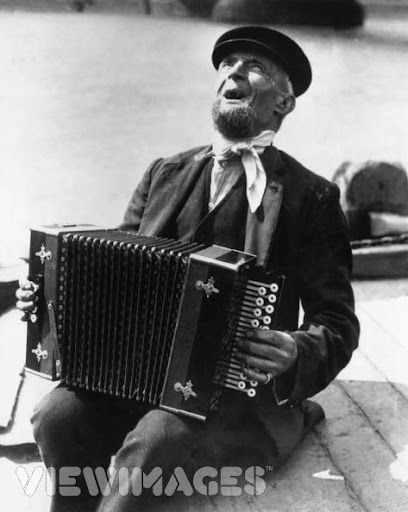
Stan was in no real hurry, but it was awkward all the same because of the accordion he had slung over his back. At every step its hardness knocked against his hip bone and sighed. step knock sigh step knock … He was grateful when the road leveled off. He nodded to Marlis behind the ticket counter just going to sit on the dock he explained as he walked by, his according still wheezing quietly like an organ with asthma.

There is a strap that’s supposed to stop that, stop the halves from moving. But with so much walking over the past year Sam’s had stretched leaving just enough play for the instrument to sag open and closed. He’d been meaning to fix it. Absent mindedly he scanned around to see if there wasn’t something of us, a length of wire or string maybe in among the scraff that accumulated just outside the gate leading to the docks.

If you hooked left just before the ferry loading area a short set of stairs led down to the private moorages. Bobbing there was an odd selection of wooden hobby boats, small aluminum fishing boats, and new white sailboats. An smattering of houseboats in various states of repair cropped up between them like oversize mollusks. He came here often. Whenever he had to wait for the ferry. Sometimes he would even come down early and sit on the porch of a grey old houseboat to practice. Dilapidated, it had two windows and no one inside. The attraction was a comfortable old wooden deck chair an no one to tell him to leave. It’s hard to find sympathy when you are learning to play the accordion.

He’d thought of buying it once, the houseboat. But no one had ever answered the letters he’d sent. It wasn’t abandoned; the moorage fees where paid every year - checks mailed from the mainland. But no ones seemed to sure who had lived there.

It had been 6 months he’d been coming out to this town. The only real work he could find had been out here but it wasn’t regular so he ferried back and forth every 4 days or so to do day work on one of the construction sites. Not his thing but as everyone said around him: it paid the bills. He’d taken the accordion up to pass the time during the crossings. He wasn’t very social, or much of a reader, but he like to do things. The boat and the instrument sometimes fused together when he dreamt: A huge sighing machine leaving notes trailing out in the froth behind it.

Now the instrument seemed like it might be his ticket to stay. He’d been invited in on a regular gig at the Pub and it might be a beginning he though. No money, no fame, but an invitation to be part of this community that lived out here. Just off the coast.

He was playing a reel in the houseboat's old wooden chair when the last call came to board. The ferry had gotten in without him realizing it somehow. He rushed along the dock and up the stairs, rounding the corner just in time to slip on before they cast off.

He sat, panting, momentarily pleased with himself for having cut it so close. The lights from town came into view, emerging from over the bluff of pine and beginning to shrink away as the boat pulled out of the harbour and swung around to make the crossing. Dusk had settled with an East wind scattering the clouds and in the clear cold sky a host of stars started to make themselves visible.

Night time was his favourite time to cut across the straight. Especially on clear nights like this when the sky glimmered with light. Navigating by the stars had been an abstraction, something only vaguely real, until one night when he had walked out on deck in the middle of the straight. There was a point where, equidistant from both harbors the ship seemed lost in darkness -- the lights from both terminals hidden by the land that protected the harbour-mouths. Standing at that point, lost in the watery darkness he had looked up and the only thing that seemed real, the only thing that he could grab onto to tell him where he was were the stars and the cold railing of the boat. He was just a passenger, but he imagined how it might feel to have a destination and to look up at the stars like a map to journey through the sky to get back to the earth. Looking up at the sky again all those memories came back to him and he unslung his accordion to practice on of the tunes that he was going to play that night.

It was as the bellows stretched over his knees that he realized his mistake. He had gone down to the docks to practice - not wait for the Ferry. Even though he had reminded himself not to board the whole way down to the terminal, he’d fallen unthinking into his habit of heading back to the mainland after a few days work. The town lights were disappearing like a train into a tunnel as they slid behind the hills that flanked the mouth of the bay.

Back there now, the distance growing, was a bar, and a stage, and a sign: “This Thursday, House band with Special Guest Accordion ”

The wind picked up, tussling his hair. He cast around looking for a way back. The next ferry wouldn’t leave until the morning. The lifeboats were secured and alarmed. He was frantic, briefly. But he quickly resolved that he would play - somehow he would play. His mind fluttered through all the possible solutions he could think of, like the pages of a book laid open in the wind.

Two things: the accordion had to stay dry and he had to be quick.

All the darkness and the cold, the starry sky, were severed by the clunk of the heavy ship’s door. Inside, glaringly bright, people, the smell of food, children running… he moved through it unaware and single minded. In the washroom he flipped the garbage can on its side and slid the bag out all in one motion. The sound of industrial plastic on teal linoleum tiles echoed against the stalls. At the bottom of the container were two fresh bags, slick black and new.

Unslinging his accordion from around his back he lowered it sighing by the strap into one of the bags and blew in a few quick breaths, knotting it tight against the water that would come. Crossing the hall he was out on deck again, under the stars, with the children still running now muted behind the door.

These were transitions that he noticed only in passing, thinking of another one -- What would the water feel like when it hit his chest?


He took the stairs to the car deck two by two, counting off minutes and distances in his head: All in all maybe five minutes, seven maybe since they have left the terminal.

How far was that?


On the last step the bagged accordion knocked against the railing making the sound of a melancholic machine held hostage.

Two hinged sections of frost fenced connected with a padlock, and a short ramp section of ship deck -- then the black edge and the white caps of the ships wake that stretched out below.


The bag came loose from his hands as he fell into the water. He bobbed to the surface seeing first the ship, another set of lights receding, then the stars, and finally the bag bobbing behind him - leading the way back. His body already ached from the cold and rivulets of salty water slicked his hair onto his forehead and ran into his mouth. Everything seemed to slow down: the waves, the ship, his mind. Thinking about it more clearly now, his hand reaching out for the wheezing bag as his legs treaded water, he wondered briefly why it was so important that he play tonight. But it was his direction. He’d been looking at a map and finally found a destination. He began to swim.

Under the stars the waves seemed to move like paper cutouts, rising and falling one behind the other. The boat and the swimmer moved mechanically across the scene, pushed in opposite directions by some hidden lever.